
The kids near the shrine at Tokyo Tower (Tower Daijingu Shrine)
As I mentioned last time, as busy as Tokyo is, with its 14 million plus people, you need some quiet time. The city has beautiful quiet spots, where you can get away from the manic crush of Tokyo’s noisy zones.
One thing I didn’t realize until I experienced Tokyo, was that the “City” of Tokyo isn’t considered a city in Japan. merged city-prefecture; a metropolis, it has features of both cities and prefectures. Each prefecture has its own mon (emblem), for identification, the equivalent of a coat of arms in the West. The inner cities remind me of neighborhoods in New York City. They are self-governed, usually have one or two train / subway stops, neighborhood groceries, small parks, and many, many shrines/
A side note about the “self-governing” city elections. It’s an odd mix of strictly maintained order and utter craziness. If you are running for office, there are limited ways to advertise. Your “billboard “is the size of a binder paper sized poster board. It contains your name, your picture, and a description of the office you are seeking. If you have room, you might be allowed a brief slogan. The poster is assigned a numbered spot on a large, white, wooden board style sign. This sign contains all the various positions up for election, along with all of the candidates. Duplicate boards are up, for about 3-4 weeks all over the small city, discreetly and tidily place in front of small parks or vacant lots they are then removed by the city a week or so after the election. For the bigger positions, such as mayor, you might have a chance for a brief TV debate, but that is about it.
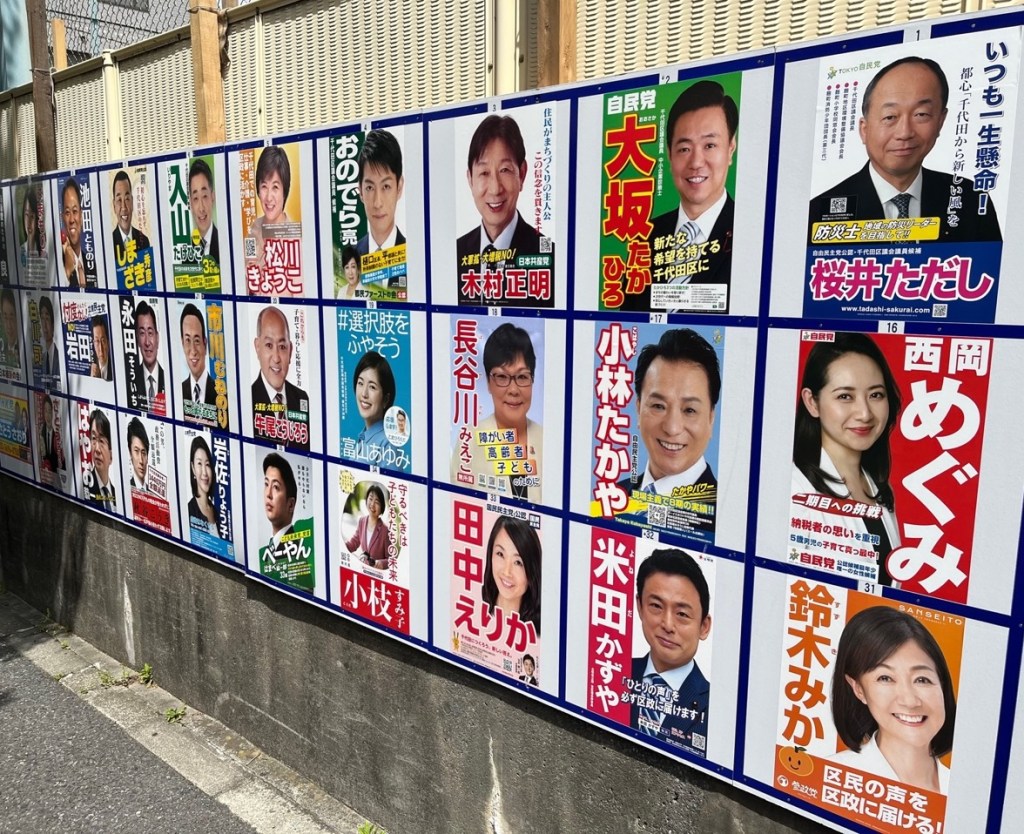
Election time!
So where is the craziness I mentioned? I did say it was a mix of strictly maintained order and utter craziness, didn’t I?
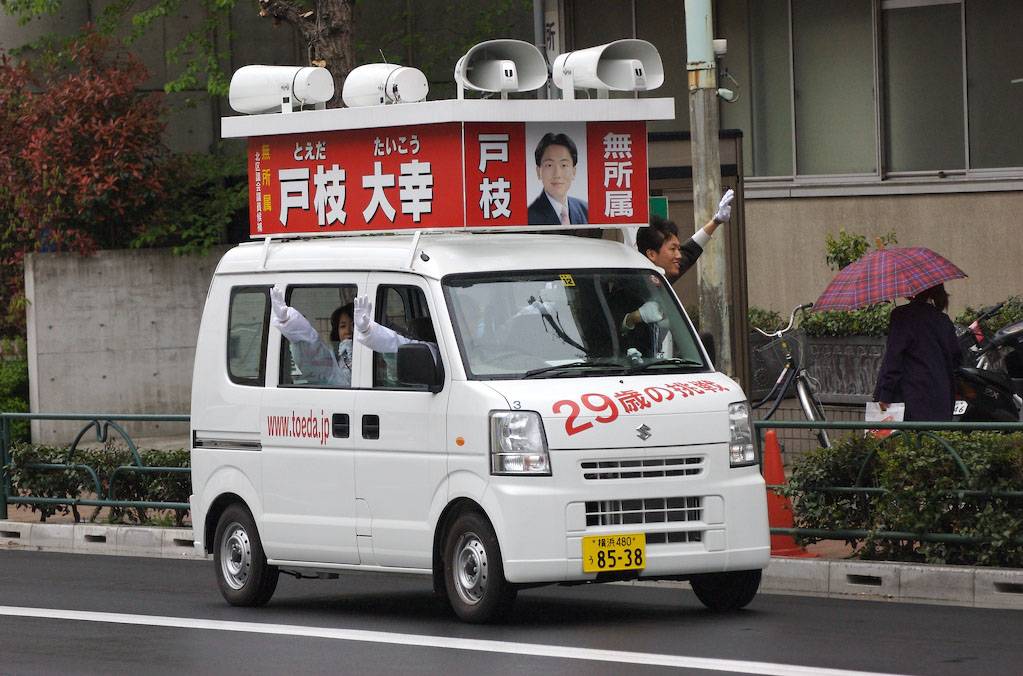
Well, that comes with the time for screaming on the street that each candidate is allotted for Japan’s version of “campaigning.” According to my family, in the smaller elections, the candidate has an assigned time to go through the neighborhoods in their jurisdiction, in their car, and shout through a megaphone, or several megaphones, their reasons as to why you should vote for them. They drive very, very slowly, so that you can thoughtfully consider their opinions. Think of the local campaigning in the US during the 1950’s and ‘60’s. They try to keep it at a respectable time because they don’t want to disturb you. Which is kind of them. Only in Tokyo, these rants are generally from 6:00am to 8:00am and 5:30-8:00pm on the evening. Daily! For Two Weeks! I’ll mention again that these are small neighborhood cities. The streets are narrow, and the buildings are 4-5 stories high, with thin walls. So yes, we can hear you. Thank you!
We also rode the trains nearly every day. The trains look old, and some are, but they are predictably on time, reasonably priced, and scoot you around Tokyo fairly fast. There are some cars in Tokyo, but the percentage of cars to people is pretty low. So yes, lots of people use the train, and yes, they do get crowded. We tried to avoid rush -hour, which is from 7-10 am and 5-7:30 pm. So, there is a lot of train riding time where you can sit down and enjoy the ride.
That being said, rush hour is like getting squeezed into a sardine can. A quick story about my nephew’s friend who took a part time morning job with the metro system. His job was to stand on the platform and stuff people far enough into the rail cars, so the doors would close. 3 hours a day from 6-9am, Monday through Friday. Really!
I had a daily need for quiet time. Frequently, I would find a small shrine, and there are hundreds of them, as we traveled through Tokyo.
Today the photos are a curated series of peaceful shrines and quiet places. I will show the busy part of Tokyo in the next post,
But for now, let’s breathe.
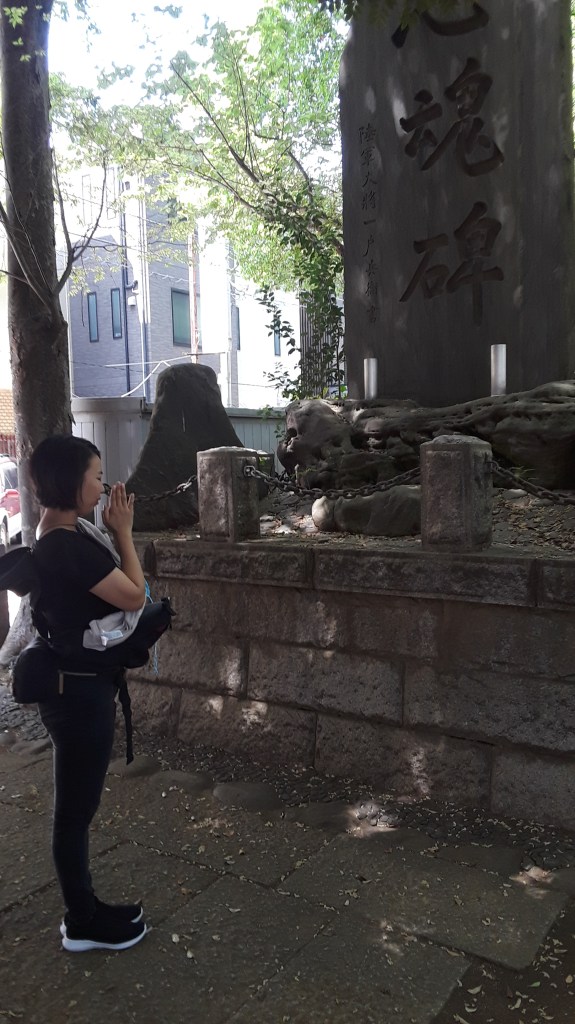
My niece at the neighborhood shrine saying a gratitude. prayer. Expressing gratitude and thanks is a daily practice in Japan, whether it be for food, service, life, or in this case, a healthy baby girl.

The path of 100 Shinto gates or “torii.” Going through the gates is a form of purification, meditation, and leaving the negative energy behind you prior to worship.

The flower lined creek to the shrine.
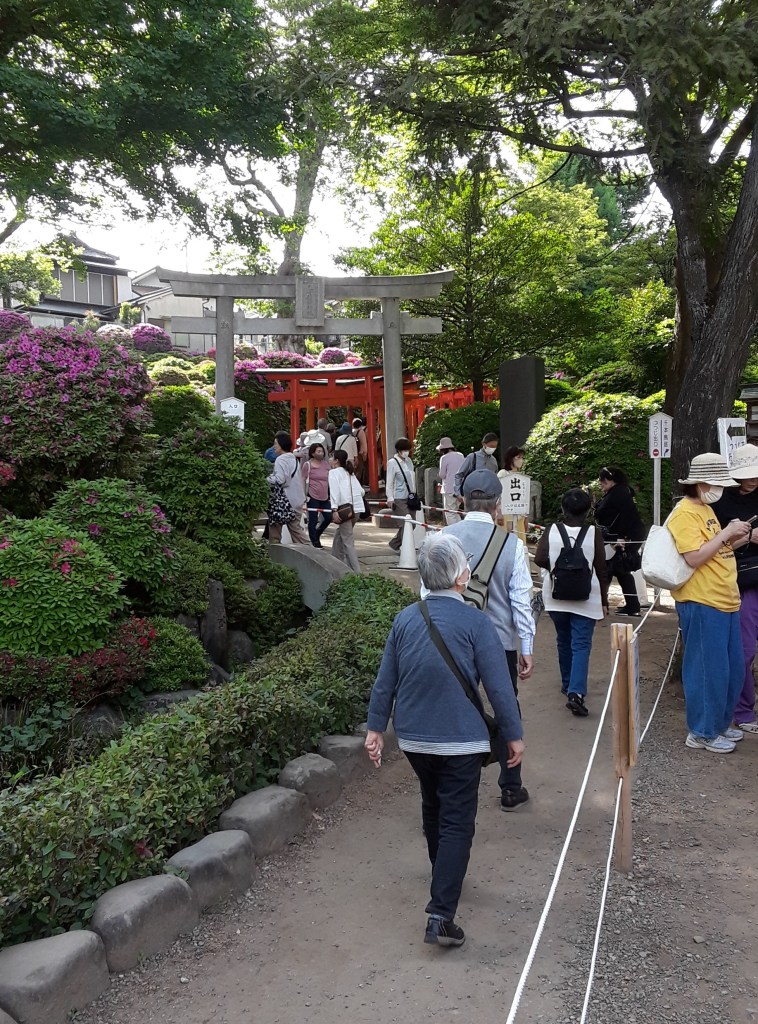
The walk to the 100 gates.

This is the torii gate called Kaminarimon (Thunder Gate), the outer gate of Sensoji Temple. When to go through the gate you leave your negativity behind as purification. The torii protects the kami (deity) that resides in the shrine area. The giant lantern has the symbol (mon) of Asakusa small city and the entire city of Tokyo A shopping plaza walkway called Nakamise, leads from the outer gate to the temple’s second gate, the Hozomon.
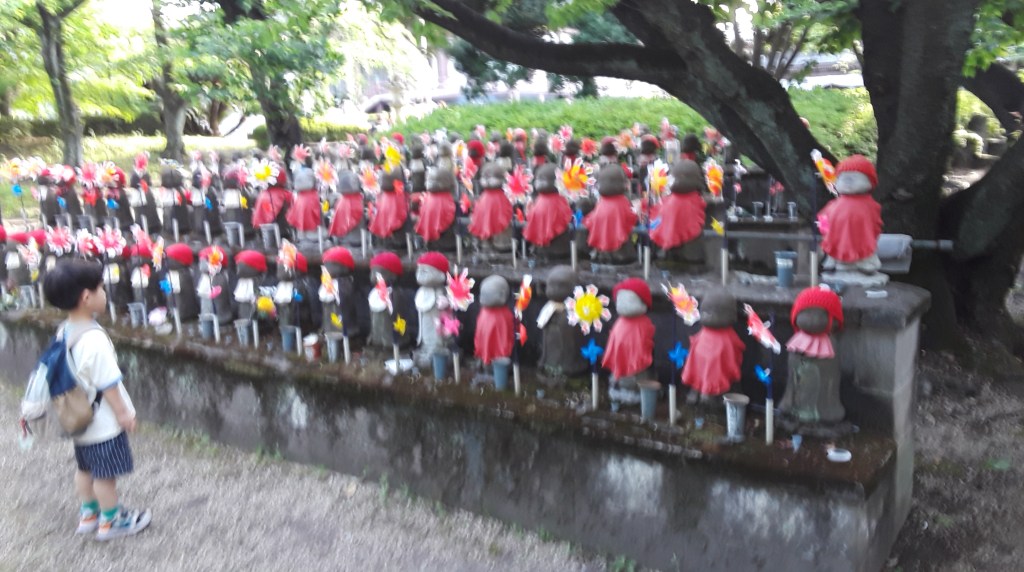
These little ones (sorry for the blurry picture) are called Jizo statues. They are representations of the deity “Jizo” who is a protector of children and travelers. The statues are dressed for Childrens Day in Japan. Some have crocheted little red caps or rain ponchos to keep them warm. Some also have pinwheels to celebrate the holiday. This is a large shrine, but one of the quieter ones in Tokyo.

This is a ceremonial washing station where you wash your hands before going into the main shrine area. You wash before praying and giving a token to your preferred deity.
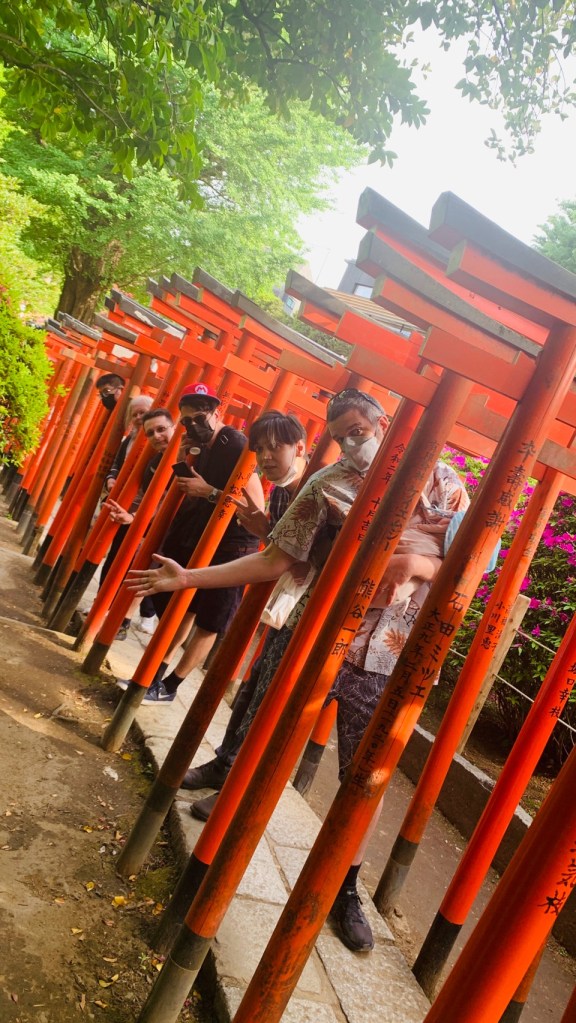
One last look at the 100 gates with my family and friends.
Next week’s post will take us through some of the more touristy parts of the city. Posts after that will includes a trip to the spa town of Hakone for a stay at an onsen, a sky ride over a slightly active volcano, and a trip to Kyoto.
Hope to see you then.
 Tread Joyfully